Foodscan.ai
EN
EN
LT
/
Frozen products
/
Bread and bread products
/
Buns
/
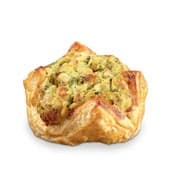
Snack with sausage and mustard, , 120g x 40 pcs, MKE343
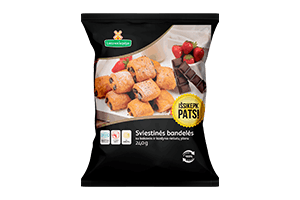
Snack with sausage and mustard, , 120g x 40 pcs, MKE343

10 people viewed this product
Share

Snack with sausage and mustard, , 120g x 40 pcs, MKE343

Barcode: 5902054014949
Country of origin: Poland
Description

Delicious and easy-to-prepare frozen bun filled with juicy sausage and zesty mustard, perfect for a snack any day or special occasions. Comes in a pack of 40 pcs, 120 g each.

Ingredients

Frozen bun with sausages and mustard. Net weight 4.8 kg (120g x 40 pcs). Ingredients: wheat flour, pork sausage 27% (pork 85%, water, salt, spice extract, stabilizer E451, preservative E250), mustard filling 16% (mustard 13% [water, mustard, spirit vinegar, sugar, salt, spices, flavoring], rapeseed oil, sugar, modified starch, whey powder, spices), water, fat mixture (palm oil, water, butter, sunflower oil, salt, emulsifiers: E322, E471, flavoring, acid E330, coloring E160a), pasteurized egg mass, whey powder, sugar, yeast, salt, emulsifier E472e, E471, buttermilk powder, wheat gluten, glucose (wheat), acidity regulators: E450, E341, rapeseed oil, stabilizer E412, processing agents: E300, amylase, hemicellulose, protease, transglutaminase. May contain traces of celery, sesame, soy, nuts. Nutritional value per 100 g: energy value 1425 kJ/342 kcal, fat 22 g (of which saturated fat acids 10 g), carbohydrates 27 g (of which sugars 4.3 g), protein 8.9 g, salt 2.3 g. Best before: see packaging. Store at -18 °C. Do not refreeze after thawing. PREPARATION: Place the product on a baking tray and thaw at room temperature. Place the thawed product into a preheated oven and bake at 200-220 °C for 20 minutes.

Additives

Hemicellulose

Amylase

Transglutaminase

Protease

Citric Acid (E330)

Sodium Nitrite (E250)

Monocalcium phosphate, dicalcium phosphate, tricalcium phosphate (E341)

Disodium trifosphate, dipotassium trifosphate (E451)

E472E

Disodium diphosphate, Trisodium diphosphate, Tetrasodium diphosphate, Dipotassium diphosphate, Tetrakalium diphosphate, Dicalcium diphosphate, Calcium acid diphosphate (E450)

E160A

Fatty Acid Monoglycerides and Diglycerides (E471)

Lecithins (E322)

Ascorbic Acid (E300)

Guar Gum (E412)

Allergens

Wheat

Milk

Eggs

Unlock Full Product Analysis

Get AI-powered ingredient breakdowns, personalized health insights, and smarter food choices — all inside Telegram.

Start Scanning for Free

Additives & Effects

All the information about nutrition and comparison with similar products

Hemicellulose: Used as a processing agent, typically considered safe and part of dietary fiber.

Amylase: An enzyme used for processing starches, generally harmless unless a specific enzyme allergy is present.

Transglutaminase: An enzyme used in food processing, generally safe but might be of concern for sensitive individuals.

Protease: An enzyme used in food processing, typically safe unless allergic to specific enzymes.

Citric Acid: Commonly used as an acidity regulator and antioxidant, with no significant known health risks.

Sodium Nitrite: Used as a preservative and color stabilizer in meat, but excessive consumption may pose risks, such as contributing to the formation of nitrosamines, which are potentially carcinogenic.

Calcium Phosphates: Used as a stabilizer or acidity regulator, typically considered safe, though overconsumption may rarely result in phosphate build-up.

Triphosphates: Can be used to retain moisture in meat products, but excessive intake may affect calcium balance in the body.

Diacetyltartaric and Fatty Acid Esters of Glycerol: An emulsifier that is generally recognized as safe.

Diphosphates: Often used as acidity regulators or stabilizers, but excessive consumption may affect the calcium-phosphorus balance in the body.

Beta-Carotene: A natural coloring agent and precursor to vitamin A, generally considered safe.

Mono- and Diglycerides of Fatty Acids: Used as an emulsifier, generally considered safe, though it may sometimes contain trace amounts of trans fats.

Soy Lecithin: Generally recognized as safe as an emulsifier, with rare cases of allergic reactions in sensitive individuals.

Ascorbic Acid: A form of vitamin C and antioxidant that is considered safe.

Guar Gum: A thickening agent that is generally considered safe, though excessive consumption may lead to digestive discomfort.

Additives Overview

Powered by AI

The product appears to be safe for consumption but may pose risks for individuals with food allergies, particularly to allergens such as celery or sesame. Additives like E250, a preservative, may cause sensitivities in some users, while E330 can alter acidity levels. Overall, moderation is advised due to the high sodium and saturated fat content.

Analysis Based on +110,000 Science & Nutrition Studies

Product Analysis

Powered by AI

The product appears to be safe for consumption but may pose risks for individuals with food allergies, particularly to allergens such as celery or sesame. Additives like E250, a preservative, may cause sensitivities in some users, while E330 can alter acidity levels. Overall, moderation is advised due to the high sodium and saturated fat content.

Other details

Added
January 19, 2025 at 15:12:37 UTC
Last checked
-
Last updated
April 6, 2026 at 15:58:52 UTC
Noticed incorrect or incomplete information about this product?
Report a problem?
;